 2:35 Minutes
 Recipes
 4 Servings


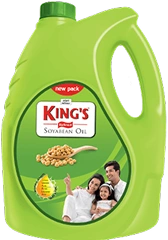
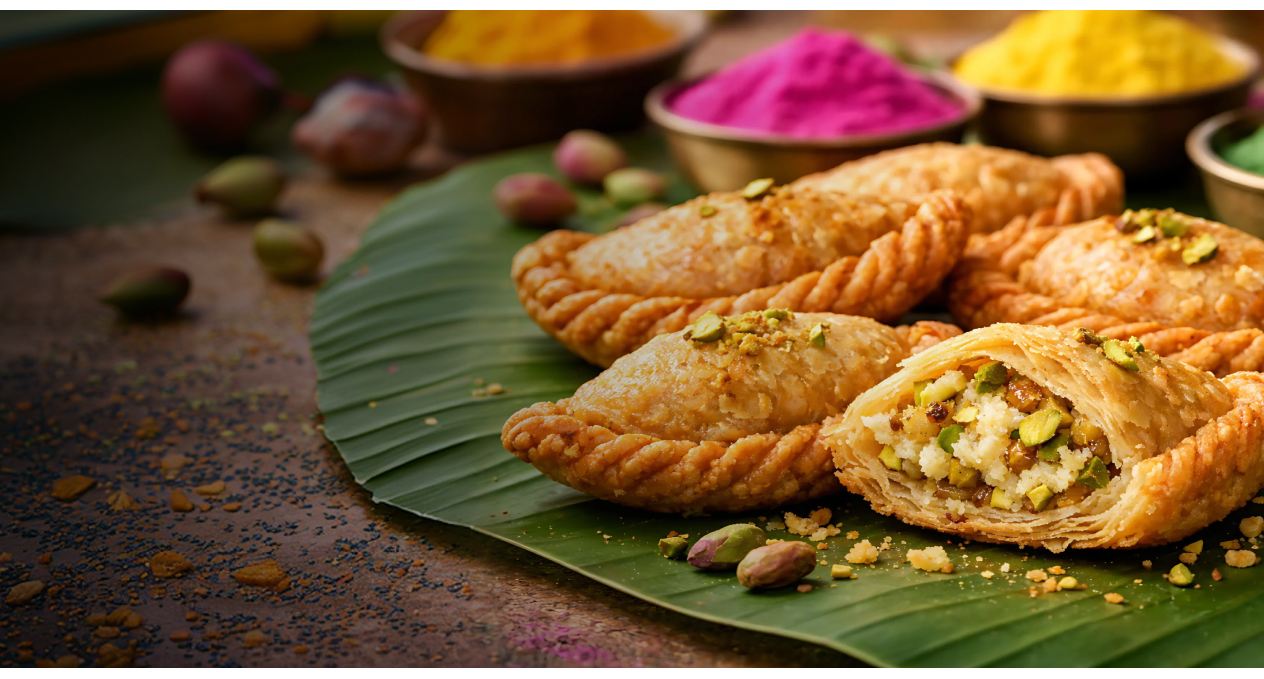
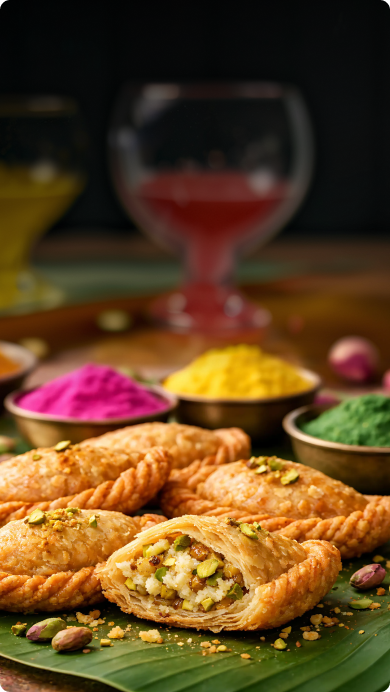
Mawa Gujiya is a traditional Indian sweet with a crispy outer shell and a rich, sweet filling made from khoya (mawa), dry fruits, and aromatic spices. Using King’s Oil for frying ensures a golden, flaky texture while keeping the gujiyas light and perfectly crisp.
This recipe combines a perfectly flaky outer layer with a rich and aromatic filling. The use of King’s Oil helps achieve even frying, giving the gujiyas a golden, crisp texture without making them heavy or greasy.
Mawa Gujiya has a rich, sweet, and slightly nutty flavour with hints of cardamom. Slow frying on medium-low heat ensures the outer layer becomes crisp and flaky while the filling remains soft and delicious.
Follow these simple steps to prepare this recipe with balanced flavor and texture.
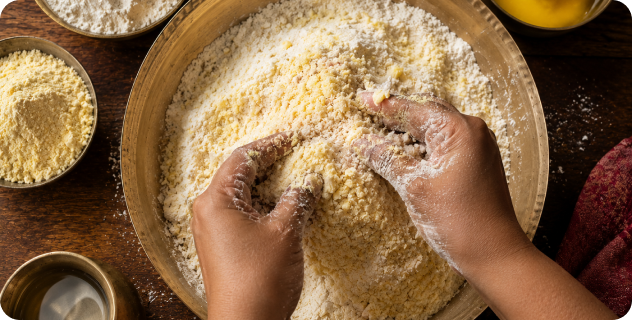
In a large mixing bowl, combine maida (all-purpose flour) and a small amount of besan for added texture.
Add ghee and rub it into the flour using your fingertips until it forms a breadcrumb-like consistency.
Gradually add water in small quantities while mixing to bring the dough together.
Knead into a firm and smooth dough without making it too soft.
Cover the dough with a damp cloth and let it rest for 20–30 minutes for better elasticity.
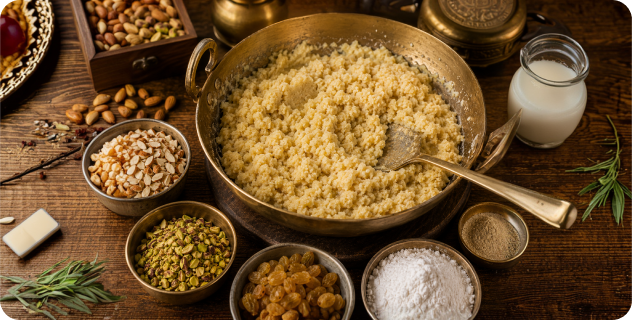
Crumble or grate fresh mawa (khoya) evenly to avoid lumps.
Heat a pan on low flame and lightly roast the mawa for 3–5 minutes until aromatic.
Stir continuously to prevent burning and ensure even roasting.
Allow the roasted mawa to cool completely before adding other ingredients.
Mix in powdered sugar, raisins, chopped almonds, pistachios, and cardamom powder to create a rich filling.
Divide the rested dough into small equal-sized balls for uniform gujiyas.
Roll each ball into a smooth circle of about 10–12 cm diameter.
Place 1–2 tablespoons of the prepared filling in the center of each circle.
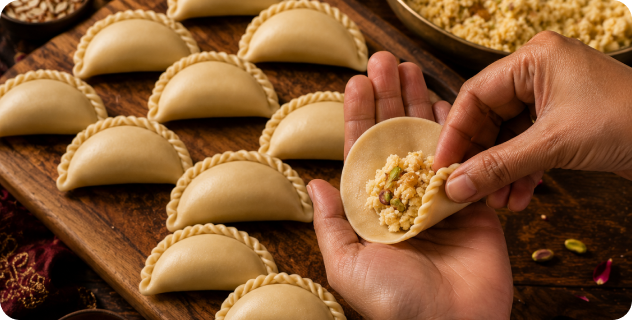
Fold the circle into a half-moon shape and press the edges gently to seal.
Use a little water for sealing and crimp the edges decoratively or use a gujiya mould.
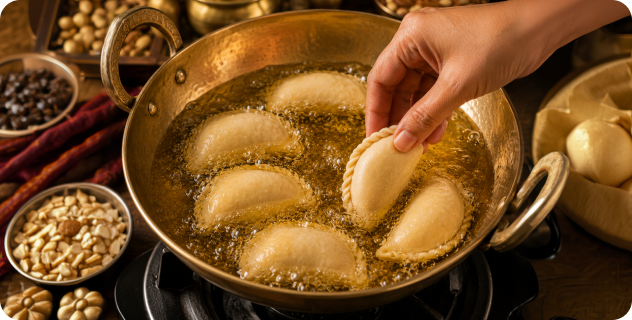
Heat King’s Oil in a deep frying pan on medium-low flame.
Check the oil temperature by adding a small piece of dough—it should rise slowly.
Carefully add the gujiyas into the oil in small batches without overcrowding.
Fry them slowly, turning occasionally to ensure even cooking.
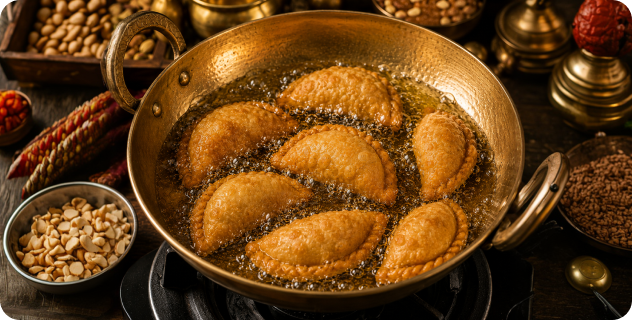
Maintain medium-low heat to achieve a flaky and crisp outer layer.
Continue frying until the gujiyas turn evenly golden brown on all sides.
Ensure the outer layer becomes crisp and slightly blistered.
Avoid frying on high heat, as it may brown quickly without cooking the inside properly.
Remove the gujiyas using a slotted spoon once perfectly cooked.
Place them on absorbent paper to remove excess oil.
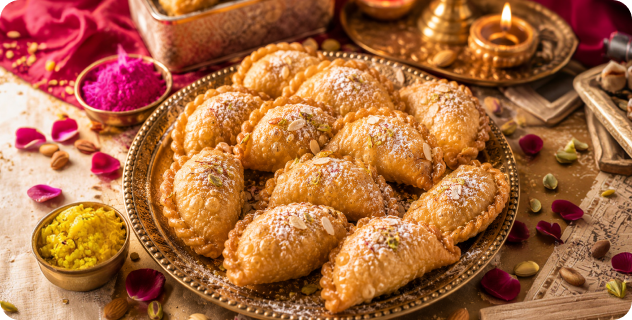
Allow the gujiyas to cool slightly before serving for the best texture.
Serve warm or at room temperature as a festive sweet snack.
Store in an airtight container to maintain crispness for several days.
Optionally, dust with powdered sugar for added sweetness.
Enjoy during festivals like Holi or Diwali with family and friends.
King’s Oil is suitable for deep frying sweets like gujiya due to its stable cooking performance and ability to deliver a crisp texture without excessive oil absorption.
King’s Oil provides a neutral taste and consistent frying results, while ghee adds a richer flavour and other oils may alter the authentic taste of traditional sweets.
Use a firm dough, proper sealing, and fry on low to medium heat. This helps create a flaky and crisp outer layer.
King’s Oil is a good choice as it ensures even frying and helps achieve a golden, crispy texture.
Improper sealing or overfilling can cause leakage. Make sure to seal edges tightly using water or a mould.
Yes, gujiyas can be baked, but frying gives the traditional crispy and flaky texture that is hard to replicate.
Yes. Use the Watch Video button on the recipe detail page to open the original recipe video.
Use the King’s edible oil recommended in the recipe, or choose the oil that best matches your flavor preference.
Yes. Open the FAQs module in admin and edit records with content type Recipe and this recipe ID.